


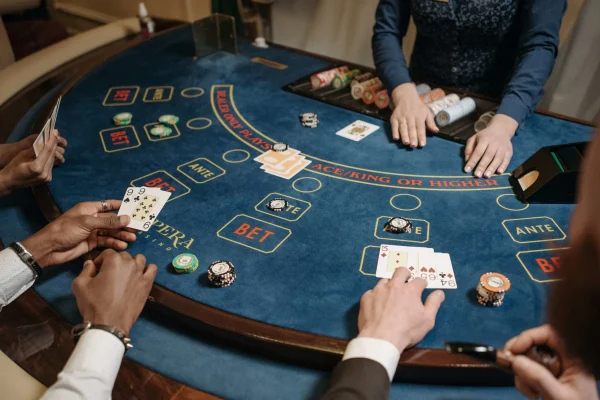


There’s a moment in live poker that never gets old. The flop hits the felt, and your opponent’s hand hovers over their chips — a tiny tremor, a quick swallow. You feel it. That pulse of hesitation. It’s information, pure and raw, and it costs you nothing but attention.
Now, imagine the same hand, but you’re staring at a flat avatar and a timer that ticks down like a metronome. No pulse. No swallow. Just a fold button and a chat box that’s either dead silent or full of emojis. Completely different beast, isn’t it?
Honestly, the psychology of poker splits right down the middle when you compare the felt to the screen. And if you’re trying to win consistently, you can’t play them the same way. Let’s break down the mental game of both arenas — and why your “reads” need a serious upgrade for the digital age.
The Live Tell: More Than Just a Twitch
Live poker is a sensory overload, and that’s the point. You’ve got the rustle of chips, the dealer’s rhythm, the way a player’s breathing changes when they look at their hole cards. It’s not just about the “twitch” — it’s about baseline behavior.
You watch a guy for an hour. He’s chatty, relaxed, leaning back. Then, suddenly, he’s rigid. He’s not talking. He’s staring at the flop like it owes him money. That’s your cue. His baseline shifted, and that shift is louder than any verbal tell.
But here’s the catch — live tells are slow to develop. You need hours, sometimes sessions, to build a reliable profile on a regular. And in a 1/2 cash game with rotating players, you’re often flying blind. The psychology shifts from “reading” to “projecting.” You’re not just observing; you’re actively broadcasting your own confidence or fear. The guy across from you is doing the same. It’s a two-way street, and the traffic is heavy.
The “Act” and the “Reality”
You know the old trick — pretending to be weak when you’re strong. It works live because humans are wired to trust body language over words. But here’s the thing: most players are terrible actors. They overdo it. They sigh too loudly, they toss their chips with fake nonchalance. The real skill isn’t spotting the lie; it’s spotting the effort behind the lie. Effort is the tell.
That said, live poker also breeds a unique kind of fatigue. The mental energy it takes to maintain a consistent demeanor for six hours is brutal. Your brain is running a subprocess that never stops — “how do I look? what does my posture say? am I blinking too fast?” It’s exhausting. And that exhaustion is where leaks appear. Late in a session, players get sloppy. Their tells get louder. Their patience thins. Patience is a live-poker weapon.
Online Poker: The Tell Is in the Timing
Now, let’s flip the coin. Online poker strips away the visual noise, but it replaces it with something arguably more precise: timing. When you play online, every action has a timestamp. The gap between the check button appearing and the click is a data point.
Instant check? That’s usually weakness — or a trap, but usually weakness. A long pause before a bet? That’s deliberation, often indicating a marginal hand being talked into a bluff. A snap-call on the river? That’s a player who had a plan and executed it. The psychology here is less about “reading” and more about pattern recognition.
But here’s the twist — online players know this. So they start acting with their mouse. They’ll deliberately tank with a monster to look weak. They’ll snap-fold a draw to look strong. It’s a meta-game on top of a meta-game. You’re not just reading timing; you’re reading why they think you’re reading their timing. It gets recursive, and honestly, it’s a bit dizzying if you think about it too long.
Multitabling and the Emotional Disconnect
Here’s the deal with online play: the emotional bandwidth is different. When you’re multitabling four or six tables, you don’t have time to get attached to any single hand. That’s a psychological shield, sure. But it’s also a crutch. You lose the ability to focus on a single opponent’s tendencies because you’re juggling a dozen decisions per minute.
And then there’s the tilt factor. Online tilt is silent. You can’t slam your fist on the table (well, you can, but it scares your cat). Instead, you click “Rebuy” in a fugue state. The lack of physical release makes the tilt fester. It’s like holding in a sneeze — eventually, it comes out sideways. Online tilt is more dangerous because it’s invisible. You can be steaming and not even realize it until you’ve dumped three buy-ins.
Key Psychological Differences at a Glance
Let’s lay it out flat, just to see the contrast clearly:
| Factor | Live Play | Online Play |
|---|---|---|
| Primary Read Source | Body language, voice, breathing | Bet timing, bet sizing, chat patterns |
| Emotional Leak | Physical fatigue, late-session sloppiness | Silent tilt, rapid-fire rebuying |
| Bluff Frequency | Lower (harder to sell a bluff in person) | Higher (easier to hide nerves) |
| Player Profiling | Takes hours, face-to-face memory | Instant via HUD stats and notes |
| Patience Requirement | Extreme (slow pace, long hands) | Moderate (fast folds, quick decisions) |
Notice the last row. Live poker tests your patience in a way that online never will. The dealer flips cards at a glacial pace. You’re sitting there, staring at the same five faces, waiting for a playable hand. That boredom is a psychological stressor. It makes you chase action. It makes you play worse hands just to feel alive. Online, you just fold and move to the next table — the boredom never settles in.
Adapting Your Mental Game
So, how do you bridge the gap? You can’t just transfer your live skills to a screen, or vice versa. You need a split personality, in a way. Here are a few adjustments that have worked for me:
- For live play, focus on your own breathing. If you’re controlling your breath, you’re controlling your tells. It sounds woo-woo, but it works. Slow exhale before a big bet. It calms the nervous system.
- For online play, use a HUD but don’t worship it. Stats are great, but they’re historical. The current hand is what matters. Use the HUD for pre-flop tendencies, but rely on timing for post-flop decisions.
- Set a “tilt threshold” for online. Decide beforehand — “If I lose three buy-ins, I’m done for the night.” No exceptions. The lack of physical cues means you need a hard rule to stop the silent bleed.
- In live games, talk less. Every word you say is a data point for observant players. You don’t need to be a statue, but be deliberate. Silence is a weapon.
- For online, vary your own timing. Don’t be predictable. Sometimes snap-fold, sometimes tank-fold. Make your timing a random variable, not a tell.
Honestly, the biggest psychological shift is about trust. Live poker, you trust your gut — the primal read on a person’s soul. Online, you trust your logic — the cold analysis of patterns and probabilities. They’re different muscles. You can’t flex them at the same time.
The Unspoken Truth: It’s Still About Them
Whether you’re staring at a human or a screen name, the core of poker psychology hasn’t changed. You’re trying to answer one question: what does this person think they have, and what do they think I have? The medium just changes how you gather the answer.
Live, you gather it through the eyes. Online, you gather it through the clock. But the underlying principle remains — humans are predictable in their fear and greed. They want to win money without losing face. They want to feel smart. They want to avoid regret. Those drives don’t care if you’re in a casino or on a laptop in your pajamas.
So, next time you sit down — or log in — take a second. Feel the difference. Acknowledge that your brain is processing a different reality. And then, use that awareness to exploit the person on the other side. Because they’re trying to do the same to you. And in that silent battle of wits, the one who adapts their psychology to the medium… well, they’re the one who walks away with the chips.
That’s the game within the game. And it never gets old.


