

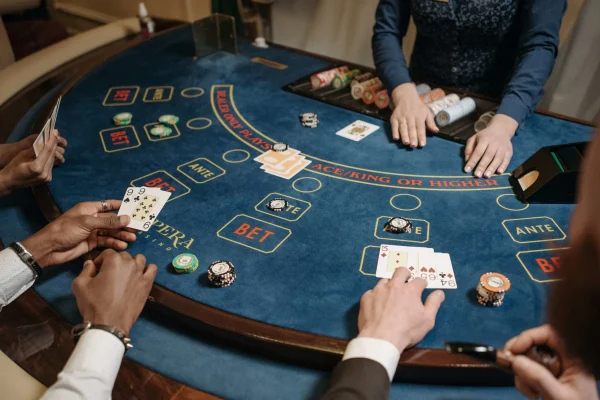


You’re sitting at a blackjack table. The dealer slides the shoe your way. You’ve got your main bet down, but then your eye catches that little circle on the felt — the side bet. Maybe it’s “Perfect Pairs,” maybe “21+3.” It promises big payouts, like 25-to-1 or even 100-to-1. Tempting, right? But here’s the thing: side bets are the casino’s playground. They’re designed to look shiny while hiding some brutal probability math. Let’s tear into that math — honestly, without the fluff.
Why side bets exist (and why you should care)
Casinos aren’t charities. They don’t add side bets because they’re generous. No, these bets exist to increase the house edge — often dramatically. The main blackjack game, if you play basic strategy, has a house edge around 0.5% to 1%. That’s pretty fair, as casino games go. But side bets? They can jack that edge up to 10%, 15%, even 20% or more. That’s like walking into a casino with a wallet full of twenties and handing them over one by one. Sure, you might hit a lucky streak, but the math is cruel over time.
Let’s break down the most popular side bets — their probabilities, house edges, and why they’re often a sucker’s game. You know, the stuff the casino doesn’t put in the glossy brochures.
Perfect Pairs: The odds of matching up
Perfect Pairs is simple: your first two cards form a pair. There are three tiers — mixed pair (different suits, same rank), colored pair (same color, different suit), and perfect pair (same suit and rank). Payouts vary by casino, but a common structure looks like this:
| Pair Type | Payout | Probability (6-deck) |
|---|---|---|
| Perfect Pair | 25:1 | 0.16% |
| Colored Pair | 12:1 | 0.48% |
| Mixed Pair | 6:1 | 1.28% |
At first glance, 25-to-1 sounds nice. But look at that probability — 0.16%. That’s roughly 1 in 625 hands. And the house edge? For a typical 6-deck game, it’s around 10% to 11%. Let that sink in. For every $100 you bet on Perfect Pairs, you’re expected to lose $10 to $11. Compare that to the main game’s $0.50 loss. It’s a different universe.
Now, some players argue that side bets add excitement. Sure, they do. But excitement comes at a cost. It’s like buying a lottery ticket every hand — except the lottery ticket has worse odds than Powerball. Honestly, you’re better off taking that side bet money and buying a nice dinner.
21+3: Poker meets blackjack
21+3 combines your two cards with the dealer’s upcard to form a three-card poker hand. You’re betting on hands like a flush, straight, three of a kind, or straight flush. Payouts can be juicy — 9:1 for a flush, 30:1 for a straight flush, sometimes 100:1 for a suited three of a kind. But again, the probability math is harsh.
Here’s a rough breakdown for a 6-deck game:
| Hand Type | Payout | Probability |
|---|---|---|
| Flush | 9:1 | 4.16% |
| Straight | 6:1 | 2.87% |
| Three of a Kind | 30:1 | 0.21% |
| Straight Flush | 40:1 | 0.11% |
The house edge on 21+3? Typically around 7% to 13%, depending on the paytable. That’s still brutal. The casino is basically saying, “Hey, want to play a side game where we have a 10% advantage? Sure, go ahead.” And people do. Because it’s fun. I get it. But if you’re playing for profit, this is a leak in your bankroll.
Lucky Ladies: The 20-point gamble
Lucky Ladies is a side bet on your first two cards totaling 20. Sounds easy, right? Well, there’s nuance. A pair of queens of hearts pays the most — sometimes 200:1 or even 1000:1 at certain casinos. But the probability of that specific event is microscopic: roughly 0.0003% (that’s 1 in 333,000 hands). Other 20-point hands — like a 10 and a 10, or a suited 20 — pay less but are more common.
Here’s the kicker: the house edge for Lucky Ladies can be as low as 2% if the paytable is generous, but it often climbs to 15% or more in less favorable versions. That’s a huge swing. You really need to check the specific rules at your table. But in general? It’s a trap. The allure of a massive payout blinds players to the fact that they’ll lose money 98% of the time on the big hits.
Over/Under 13: The simplest sucker bet
Over/Under 13 is dead simple: your first two cards total over 13 or under 13. Aces count as 1. Payouts are even money. Sounds fair, right? Wrong. The house edge is around 6% to 10%. Why? Because the distribution of card totals is skewed. You’re more likely to get totals between 12 and 16, but the bet doesn’t account for pushes (a total of exactly 13 is a loss). It’s a classic “too good to be true” scenario.
I’ve seen players throw chips on this bet thinking it’s a coin flip. It’s not. It’s a rigged coin flip — one where the casino has a loaded die. The probability of winning is about 47%, losing 53%. Over 100 hands, you’re down 6 units on average. That’s not entertainment; that’s a slow bleed.
The house edge comparison: Side bets vs. main game
Let’s put it all in perspective. Here’s a quick comparison of house edges:
| Bet Type | Typical House Edge |
|---|---|
| Main blackjack (basic strategy) | 0.5% – 1% |
| Perfect Pairs | 10% – 11% |
| 21+3 | 7% – 13% |
| Lucky Ladies | 2% – 15% |
| Over/Under 13 | 6% – 10% |
Notice the gap. The main game is a gentle stream. Side bets are a waterfall. You might catch a rainbow now and then, but you’re mostly getting wet and losing your footing.
Can you beat side bets with card counting?
Well… sometimes. A few side bets are vulnerable to card counting. For example, Lucky Ladies becomes beatable when the deck is rich in tens and queens. The probability of hitting a 20 increases, and the house edge can flip to a player advantage. But here’s the catch: casinos know this. They’ll shuffle more often, limit bet sizes, or simply ban you. It’s a cat-and-mouse game, and the cat has deep pockets.
Most side bets, though, are resistant to counting because they rely on rare events. Perfect Pairs, for instance, has such a low frequency that even a perfect count barely moves the needle. You’d need a massive bankroll and a lot of patience — and even then, the variance is brutal. It’s like trying to catch a butterfly with a net made of spaghetti. Possible? Sure. Practical? Not really.
Why players still love side bets (and why that’s okay)
Look, I’m not here to shame anyone. Side bets are fun. They break up the monotony of basic strategy. They create those “wow” moments when you hit a perfect pair and the table erupts. That’s real. That’s human. But the key is to treat them like a slot machine — a small, disposable wager for entertainment, not a path to profit.
If you’re going to play a side bet, set a limit. Maybe $5 per hand, and only when you’re already up. Or better yet, skip it entirely and put that money toward better odds — like a higher main bet or a good meal. The math doesn’t lie. But it also doesn’t have to ruin your night.
A final thought on probability and perspective
Probability is a strange beast. It doesn’t care about your feelings, your lucky shirt, or that time you hit three perfect pairs in a row. It’s cold, hard, and patient. Over thousands of hands, the house edge on side bets will grind you down. But in the short term — well, anything can happen. That’s the beauty and the danger of gambling.
So next time you see that side bet circle, pause. Ask yourself: “Am I here for the thrill, or am I here to win?” If it’s the thrill, go ahead — just know the price. If it’s to win, walk away. The main game is already a fair fight. Don’t turn it into a mugging.
In the end, blackjack is a game of decisions. The best decision you can make is to understand the odds — and then decide if the gamble is worth it. For most of us, it’s not. But hey, that’s your call.


