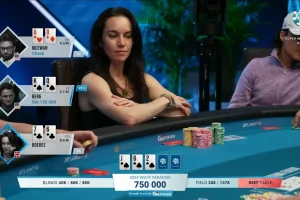


Let’s be real for a second. Poker isn’t just a card game — it’s a psychological battlefield. Whether you’re sitting across a felt table in a smoky casino or staring at a glowing screen in your pajamas, the game is fundamentally the same. But the way you play? Totally different. I’ve logged hours in both worlds, and honestly, the behavioral shifts are wild. Let’s break it down.
The Physical Tell vs. The Digital Read
In live poker, your body is a leak. A twitch, a sigh, a shaky hand — they all scream information. You’re constantly scanning for “tells.” That guy who stares too long? He’s bluffing. The one who checks his chips nervously? He’s got a weak hand. It’s primal, almost animalistic.
Online, though? You lose all that. No facial expressions, no body language. Instead, you’re reading timing — how fast someone bets, how long they pause. A quick call might mean strength. A delayed raise? Could be weakness. It’s a different language. And honestly, it’s easier to fake confidence online. You can be shaking like a leaf IRL but type “lol” in the chat and nobody knows.
Here’s the kicker: multitasking
Live poker demands focus. You’re watching players, counting chips, reading the room. Online? You’ve got five browser tabs open, Netflix on the side, and you’re texting your buddy. That split attention changes your decision-making. You’re more impulsive, less patient. I’ve caught myself snap-folding hands I’d normally think about for a minute. It’s a real problem — and a behavioral trap.
Emotional Control: The Tilt Factor
Tilt — that rage spiral after a bad beat — hits differently in each format. In a live game, you can’t hide it. Your face flushes, your breathing quickens. Other players see it. They’ll exploit it. You might storm off to the bathroom to cool down, but the damage is done.
Online tilt is… quieter. You smash your keyboard. You curse at the screen. But nobody sees it. That anonymity can be dangerous — you can tilt for hours without a social check. I’ve seen guys lose buy-in after buy-in because they just kept clicking “rebuy.” No one to say, “Hey, take a walk.”
Key difference: Live poker forces you to regulate emotions publicly. Online poker lets you spiral privately. Which is worse? Honestly, both suck. But online tilt is sneakier — it creeps up on you.
Betting Patterns and Aggression
Here’s a weird thing I noticed: players are more aggressive online. Way more. Why? Because it’s easier to bluff when you’re not looking someone in the eye. You can fire a triple-barrel bluff without a bead of sweat. In live poker, that same bluff takes guts. Your hands might shake. Your voice might crack.
Online, you just click a button. It’s detached. That leads to looser play — more raises, more re-raises, more all-ins with marginal hands. Live poker tends to be tighter, more cautious. People respect their chips more when they’re physical objects.
- Live: Slower pace, more passive, lots of limping.
- Online: Faster pace, hyper-aggressive, constant 3-bets.
It’s like comparing a chess match to a speed chess game. Same rules, totally different rhythm.
Social Dynamics: The Human Element
Live poker is a social event. You’re chatting, joking, maybe having a drink. That camaraderie changes the game. You might be less likely to bluff a friendly guy who just told you about his kids. There’s a human connection that softens the edges.
Online poker is cold. You’re just a username. No small talk, no eye contact. That anonymity makes it easier to be ruthless — but also lonelier. Some players thrive on that isolation. Others miss the banter. I’ve seen live players struggle online because they can’t read the room. And online grinders feel awkward in live games because they don’t know how to act.
A quick table for clarity
| Aspect | Live Poker | Online Poker |
|---|---|---|
| Speed | Slow (30 hands/hour) | Fast (60-100 hands/hour) |
| Tells | Physical (eyes, hands) | Timing, bet sizing |
| Emotion | Visible, public | Hidden, private |
| Social | High interaction | Low interaction |
| Aggression | Moderate | High |
| Multitasking | Rare | Common |
Decision Fatigue and Volume
Online poker is a volume game. You see way more hands, way faster. That means more decisions per hour. And more decisions = more fatigue. Your brain gets fried. You start making sloppy calls, chasing draws, ignoring pot odds.
Live poker is slower. You have time to think. You can count your chips, study the board, take a sip of water. That downtime helps you stay sharp. But it also means fewer opportunities to recover from losses. One bad beat in a live game can ruin your whole session. Online, you can grind through it — but you might also dig a deeper hole.
I’ve noticed that online players develop a kind of “click fatigue.” They stop thinking and start reacting. It’s a dangerous habit. Live players, in contrast, tend to be more deliberate. They’ve got the luxury of time — and they use it.
Bankroll Management: The Hidden Behavioral Shift
This one’s subtle but huge. In live poker, you’re handling physical chips. You feel the weight of your stack. Losing a big pot hurts — you see the chips disappear. That tactile feedback keeps you grounded.
Online, chips are just numbers on a screen. It’s abstract. You can lose $500 and it feels like a video game. That detachment leads to worse bankroll management. Players take shots at higher stakes, chase losses, ignore their stop-losses. It’s like using a credit card vs. cash — you spend more when you don’t feel the pain.
Pro tip: If you play online, set a hard stop-loss. And stick to it. Your future self will thank you.
Adapting Your Game: The Hybrid Player
So, which is better? Honestly, neither. They’re different beasts. The best players adapt. They take what works from each format and blend it. Live players can learn online aggression. Online players can learn live patience.
But here’s the thing — most players don’t adapt. They stick to one format and get comfortable. That’s a mistake. The poker world is evolving. Online tools are getting smarter. Live games are getting tougher. If you want to stay ahead, you need to understand these behavioral differences and exploit them.
Whether you’re a live grinder or an online shark, the core truth remains: poker is a game of people, not cards. And people behave differently depending on the environment. Recognize that, and you’re already ahead of the field.
Now go play — but play smart.